Wedding Cake Budget vs Reality
One of the biggest challenges when planning a wedding cake isn’t choosing a design.
It’s understanding what it should cost, and whether what you’re seeing is actually achievable within your budget.
There’s often a disconnect between inspiration and reality, and it’s not always obvious until you start getting quotes.
What you’re seeing vs what’s realistic
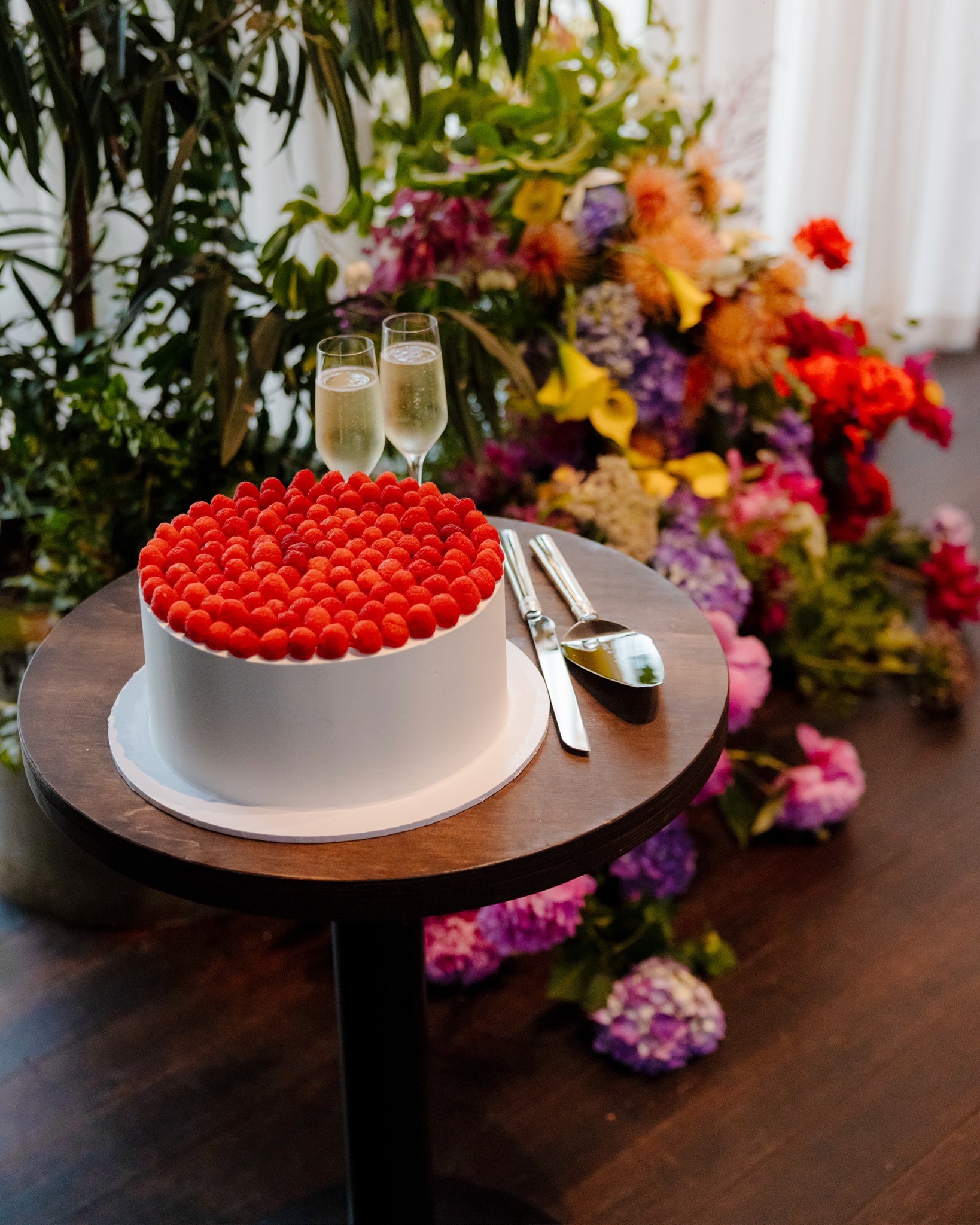
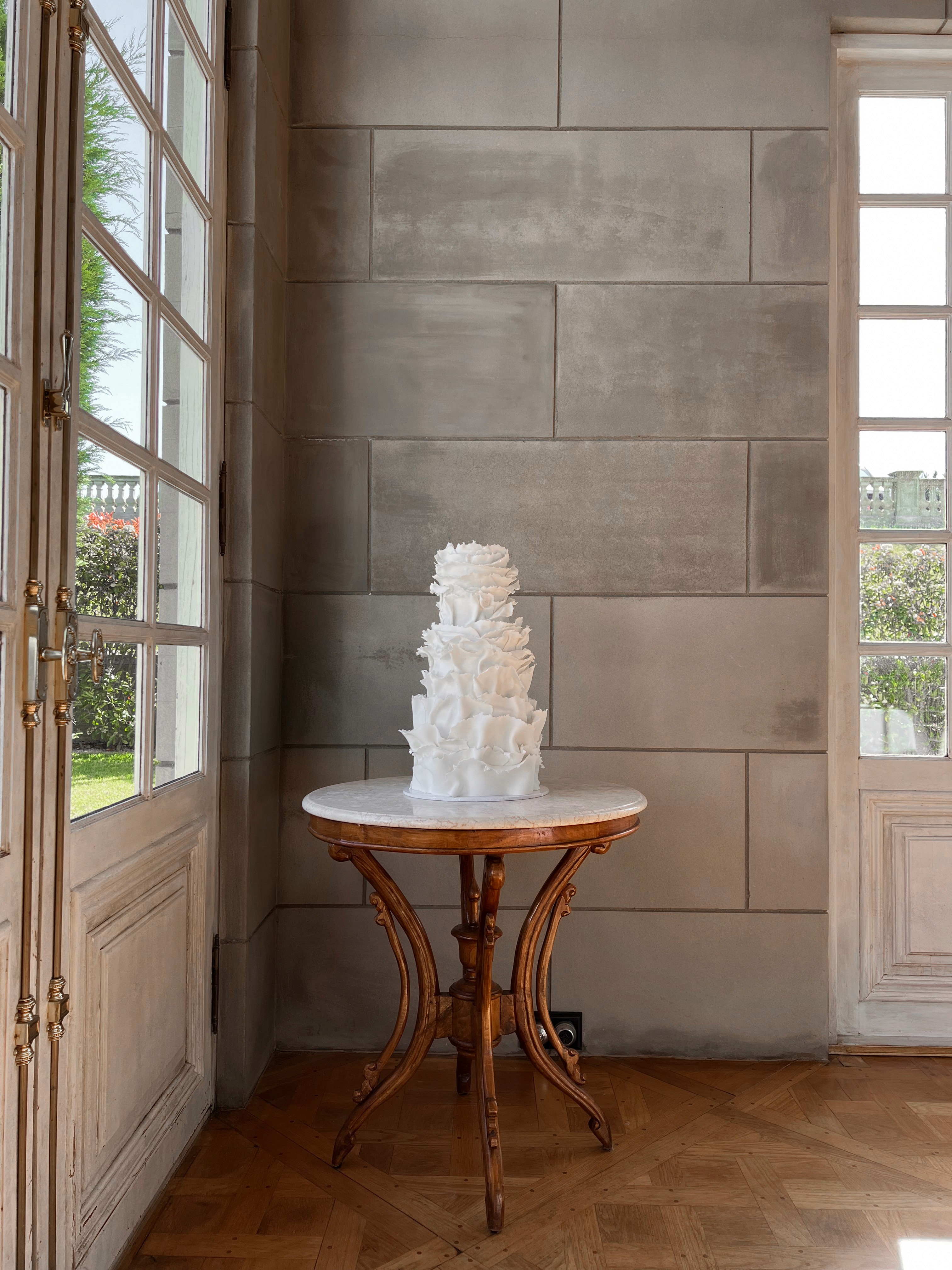
A lot of the weddings featured in online wedding publications, including blogs, articles, and planning platforms, are showcasing highly produced, luxury weddings with significantly larger budgets.
These aren’t everyday weddings. They’re often events where the overall spend allows for a higher level of detail, scale, and coordination across every element of the day.
At the same time, you’ll see articles referencing “average wedding budgets” without showing what those budgets actually produce.
So you end up with two different narratives:
a visual standard based on high-end weddings
a budget reference that sits much lower
The gap between those two is where most couples begin planning with unrealistic expectations.
Where average figures fall short
You’ll often come across articles that try to define an “average” wedding cost in Australia.
For example, Easy Weddings reports that the average wedding cost in 2025 for Victoria sits around $37,128, with an average spend of $649 allocated to the wedding cake.
On the surface, this feels like a helpful benchmark. But it doesn’t explain what that number actually includes.
There’s no clarity around:
how many guests that cake is designed to serve
what type of serving it’s intended for
what level of finish is included
whether delivery and venue placement are part of that figure
or if tastings and consultations are factored in
Without that context, the number becomes difficult to apply.
The use of the word “average” also suggests a standard, when in reality wedding cakes vary significantly depending on scale, structure, and design.
In practice, these figures tend to reflect simpler or smaller-scale cakes, rather than custom commissions developed for a specific wedding.
Why pricing doesn’t follow a fixed structure
Unlike catering or venue packages, a wedding cake isn’t selected from a list.
It’s built around what it needs to do.
That affects:
the overall size
how it’s constructed
how long it takes to produce
and how it’s delivered and set up
This is why pricing can feel inconsistent from the outside, even when there’s a clear logic behind it.
If you’re looking for a clearer breakdown of how this translates into cost, it helps to understand what a wedding cake typically costs in Melbourne.
What drives cost in real terms
Two cakes can look almost identical in photos, but be completely different in how they’re made.
For example:
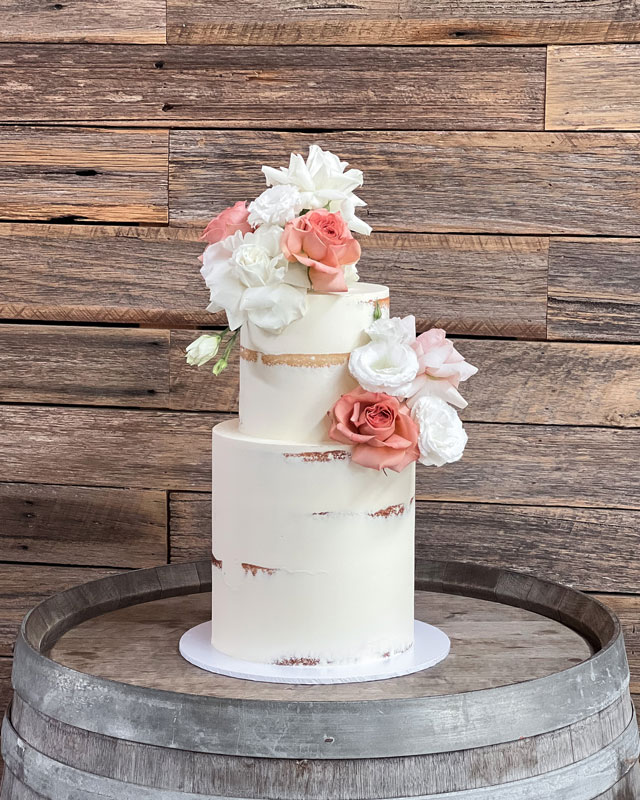
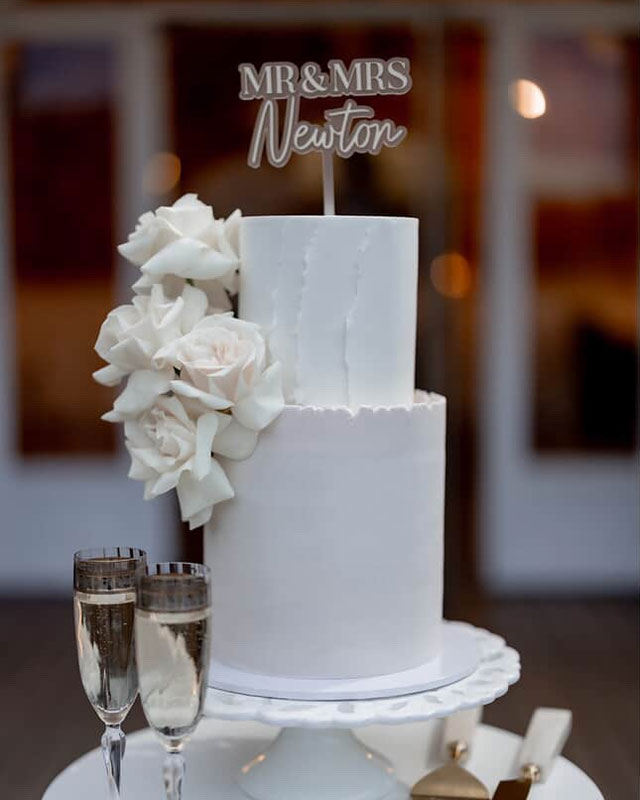
A two-tier cake finished in smooth white buttercream with white florals, and a two-tier cake finished in white fondant with the same florals.
Visually, they can appear almost the same but the process behind them is very different.
From a production perspective, the difference is in the hours of labour.
A real-world comparison
To make this more tangible, lets use the above two tier design as a comparison and lets consider two scenarios:
Scenario one
A smaller, two-tier cake designed for coffee-style servings, finished in swiss buttercream and fresh flowers.
Scenario two
A larger two-tier cake for the same number of guests, designed to be served as dessert with a fondant finish and fresh flowers.
Both may look comparable in images, but the second involves:
more ingredients
more time in production
more complex construction
and more flowers.
The difference in cost reflects what’s required to produce and present it.
A familiar point of reference
If you step outside weddings for a moment, a single slice of cake at a café or dessert store will often sit at or above the $10 mark.
That’s for a product that is:
pre-designed
produced in batches, often using commercial pre mix cake mixes
not created for a specific event
A wedding cake is made differently.
Everything is produced in small batches using raw ingredients rather than pre mix, which results in a higher level of time and labour.
It’s designed for the scale of the event, and how it will be presented and served on the day.
The comparison isn’t exact, but it provides a useful point of reference.
How to use inspiration properly
Reference images are an important part of the process.
They help communicate direction, whether that’s colour, texture, or the level of detail you’re drawn to.
Where it becomes difficult is when those images are treated as a fixed outcome.
What isn’t visible in a photo:
how many serves the cake provides
how it’s constructed
how it’s delivered and assembled
how much time is involved in achieving the finish
The role of a reference image is to guide direction, not define the final result within a specific budget.
If you’re working through how to approach this, it helps to understand how to choose a wedding cake that fits your plans.
A more realistic way to approach your budget
Instead of trying to match a specific image, it’s more effective to work in reverse.
Start with what the cake needs to do, then shape the design accordingly.
This leads to a more considered outcome and avoids trying to force a concept into a budget that doesn’t support it.
A more grounded expectation
There isn’t a single number that applies to every wedding cake but once you understand what’s required, the numbers start to make sense.
And more importantly, you’re no longer trying to match an image. You’re making decisions that actually fit your wedding.
If you’d like a clear breakdown tailored to your wedding, you can enquire here and I’ll put together a Wedding Edit based on your plans.